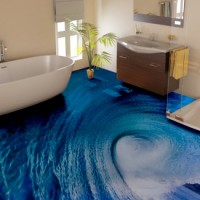
 Epoxy resins are polymeric compounds that have become widely used today. In general, resins produced in liquid form can be used as epoxy floor coating with the help of hardening materials.
Epoxy is a class of thermoset resin obtained by polymerization of epoxides. It can form tightly bonded cross polymer structures and can be made into an adhesive or cured to form high strength polymers.
The most common epoxy resins are produced from a reaction between epichlorohydrin (ECH) and bisphenol-A (BPA), but other raw materials (such as aliphatic glycols, phenol, and o-cresol novolacs) are involved in the process to produce special resins.
Epoxy Resin Production Stages
Generally, epoxy resin production takes place as follows:
1- ECH and BPA are given to a reactor and the process is started. 2- When the boiling point is reached, caustic soda solution is added to the reactor at a ratio between 20 and 40%.
3- After the process, epichlorihydrin (ECH), which does not react, is evaporated and removed from the reaction medium.
4- The two phases remaining in the reaction are separated by adding an inert solvent such as methyl isobutyl ketone (MIBK).
5- The resin in the reactor is washed with water and distilled by vacuuming.
6- Different compounds are added to add new properties according to the requested epoxy resin type. The properties of the resin such as color, hardness, odor, transparency, flexibility and viscosity are differentiated and shaped according to the area of use.
7- After the resin production, it is generally desired to obtain hardness. For this, amine group compounds are added to the resin. Epoxy resins are cured between 5 and 150 degrees. The reaction time will vary depending on the ambient temperature. Reaction takes longer to occur in very cold environments. For this reason, it is recommended that the environment where the resins to be cured will be applied should be at least 5 degrees and above.
Epoxy Resin Usage Areas
In our country, especially used as epoxy flooring material, resins are preferred for their superior properties compared to other floor types with their non-slip, non-corrosive and smooth structure. Apart from this, it is widely used in areas such as deck coatings, structural steel coatings and tank coatings, aircraft coatings, automotive linings and collapsible pipe coatings in the maritime sector.
As chemically resistant mortars; It is used as a reinforcer in printing inks, fabric treatments, surgical procedures and prostheses, breaking petroleum emulsions and light chemically resistant foams.
It can also be used as an additive to various other plastic materials such as vinyl and acrylic resins and natural and synthetic rubbers.
You can contact us for epoxy floor covering price information about epoxy resins. When you meet with our company, which has been providing professional services to you on epoxy flooring for years, you will open the doors of the highest quality service.
 Flooring Systems